A conference isn’t structured like a trade show. Multiple sessions run at once, split across several tracks, and speaking rooms are scattered across a building. Poster sessions need their own wayfinding on top of that. Standard event apps rarely bend into this shape, which is why so many academic societies end up commissioning a new app for every single conference.
The development cost alone is a real line item. Then attendees decline to download it, and the investment produces nothing. A conference platform solves both problems at once.
What a conference platform actually is
A conference platform runs an entire event as one system: session schedules, room wayfinding, poster session locations, each attendee’s personal agenda, and business matching, all inside a single screen. No app install. A QR scan is the entry point. No app, period. GrowSpace for Events runs this way, and alongside trade shows and general conferences, it carries features built specifically for academic conferences and society meetings.
What goes wrong most often at academic conferences
Attendees can’t find the right room. Once sessions multiply, on-site staff can’t keep up with wayfinding questions. Poster sessions are the worst offender, their locations confuse people more than any other part of the event, and a conference split into multiple tracks makes all of this worse. A printed program book can’t reflect a last-minute room change; the paper is already out the door by the time the change happens.
GrowSpace for Events covers track-by-track scheduling, wayfinding to speaking rooms, and poster session location guidance, all together. Attendees can also select the sessions they plan to attend and save them as a personal schedule.
How QR-based guidance works at an academic conference
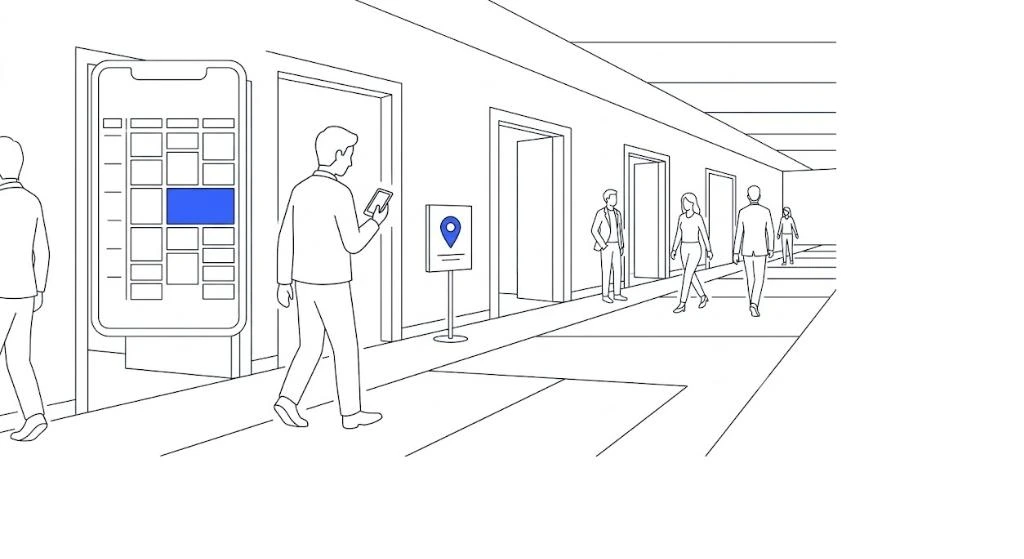
A QR code goes out at check-in. Scanning it opens the conference’s guide page directly, no app required. From there, an attendee checks the session schedule, finds a speaking room, and locates a poster session, all without installing anything. A stamp tour can run on the same screen too, used for booth-visit confirmation, credit verification, or a prize drawing.
How this scales with event size
A single-track workshop and a thousand-person, multi-track academic conference need different depths of the same system, but the underlying platform doesn’t change. Smaller events lean mainly on wayfinding and a schedule. Larger, multi-track conferences add personal scheduling, poster session search, and business matching between attendees and speakers on top of that same base.
FAQ
Do we still need a printed program at all?
Not as the primary source of schedule information. A digital schedule updates the moment a room or time changes, which a printed program can never do once it’s been handed out.
Can this handle poster sessions specifically?
Yes. Poster session locations get the same searchable wayfinding as speaking rooms, so attendees aren’t wandering a hall trying to match a paper title to a numbered board.
The app nobody had to build
The real cost of a custom conference app was never just the invoice. It was attendees who never downloaded it. Move the same functions onto a QR-based platform, and that adoption problem disappears along with the development bill.
→ See how GrowSpace for Events runs academic conferences and society meetings.