

A forklift proximity-warning brief should specify the intended warning function, its recipient, the expected response and the evidence needed when the system cannot perform as intended. Keep location monitoring, proximity detection, alerts, event records and machine control as separate requirements. Each needs its own scope and verification.
This is a procurement checklist for review with qualified workplace-safety and engineering specialists. It does not prescribe a safe distance, vehicle speed, stopping rule or site-specific safety design.
Start with the site hazard and the existing controls
Describe the work situation that prompted the inquiry: a crossing, limited visibility, mixed pedestrian and vehicle traffic, loading operations or another observed issue. Include vehicle types, movement patterns and the people who may enter the area. Do not reduce the problem to choosing a radio technology before the hazard is understood.
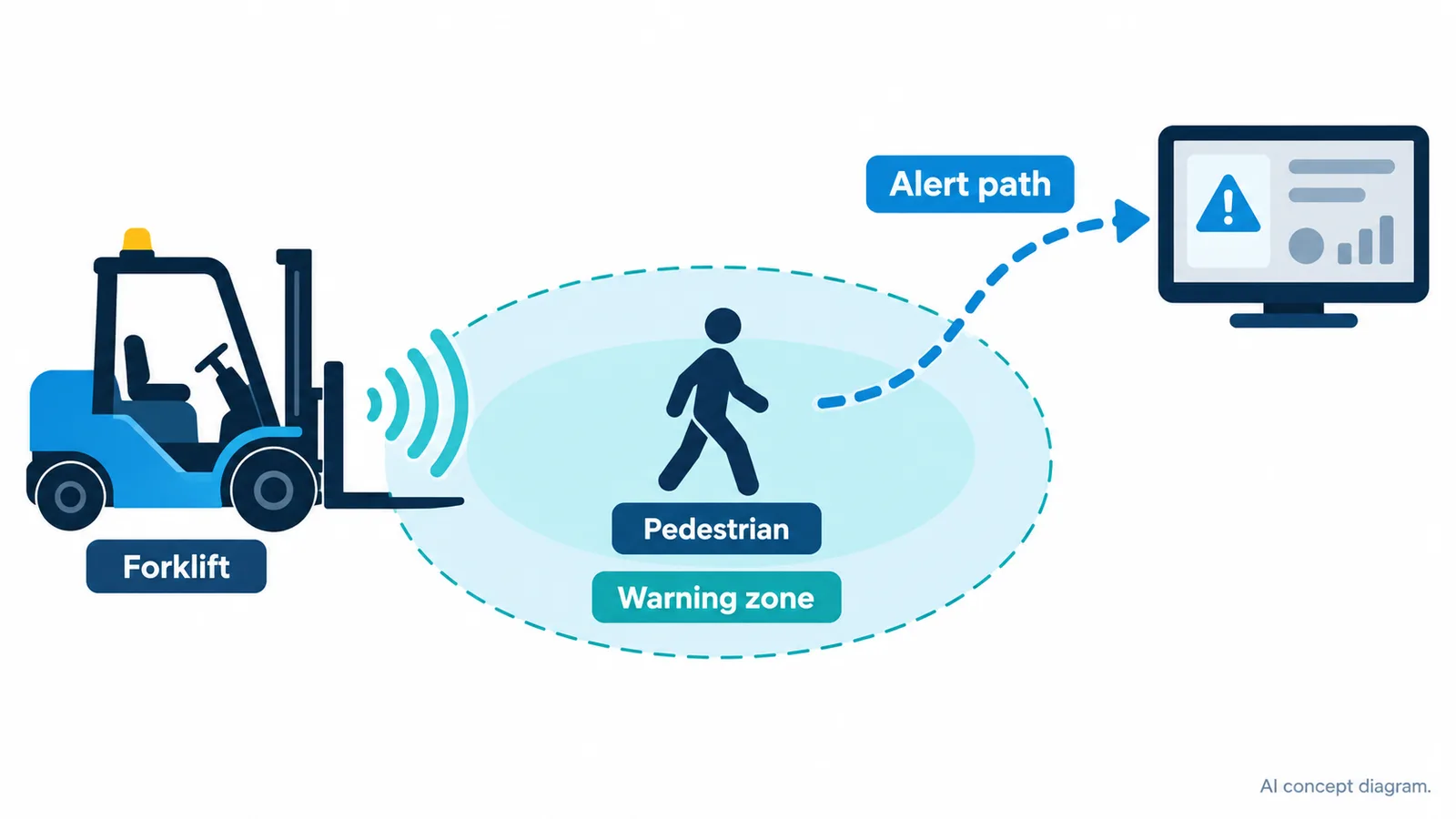
The UK’s Health and Safety Executive guidance on separating pedestrians and vehicles emphasizes separation and review of routes and crossing points. OSHA’s powered industrial truck overview also explains that hazards and appropriate measures depend on the truck and workplace. These are jurisdiction-specific sources, not a determination of the requirements at your site.
Ask the responsible safety team how a proposed warning system would fit with the site’s controls, procedures, training and inspection arrangements. A technology demonstration should not be used to remove or weaken an existing control without the required qualified assessment and approval.
Separate the requested functions
The matrix below is a scope worksheet. It does not assign a certified safety function to GrowSpace, Q1 or SpaceGuard.
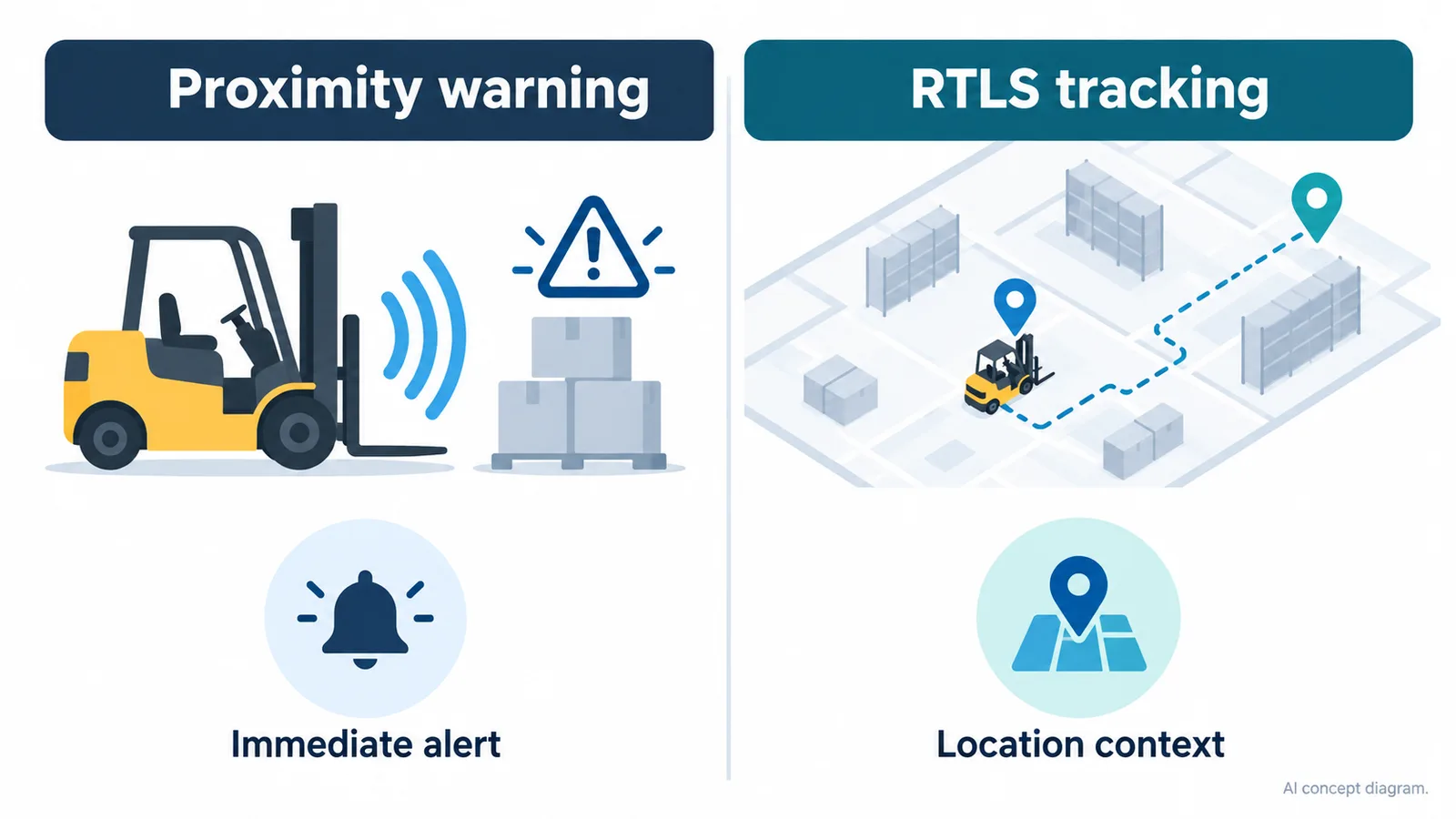
| Function | Procurement question | Evidence to request |
|---|---|---|
| Position monitoring | What objects or people are represented, and where? | Exact product, coverage and operating-condition evidence |
| Proximity detection | Which relationships or approaches are detected? | Defined detection function and its limitations |
| Warning | Who receives which signal, through what device? | Demonstration of the actual alert path and its documented behavior |
| Human response | What is the recipient expected to do? | Procedure reviewed by the responsible safety specialists |
| Event recording | What is recorded, and what may be missing? | Event definition, timing basis and data-gap behavior |
| Machine intervention | Is any speed or braking action actually provided? | Separate technical scope, interfaces and applicable safety evidence |
| Fault or degraded state | How is unavailable detection or warning communicated? | Documented failure behavior and appropriate test evidence |
If machine intervention is not in the documented scope, do not infer it from an alert demonstration. If it is required, identify that as a distinct engineering and assurance requirement.
Review what the demonstration establishes
Video caption: SpaceGuard forklift proximity-warning demonstration. This is a warning-function demonstration, not Q1 kit performance, a certified safety-function claim, or evidence of automatic braking.
A demonstration does not establish detection reliability across your site’s loads, obstructions, approach directions or operating conditions. Ask for the exact equipment and software versions, what was configured and which behavior was observed. Request separate evidence for any claim that will be part of acceptance.
The GrowSpace factory-safety page, checked on 6 October 2026, provides a consultation route for site assessment and deployment scope. The procurement questions in this article do not extend the capabilities or certifications stated for any offered product.
Ask about the entire warning path
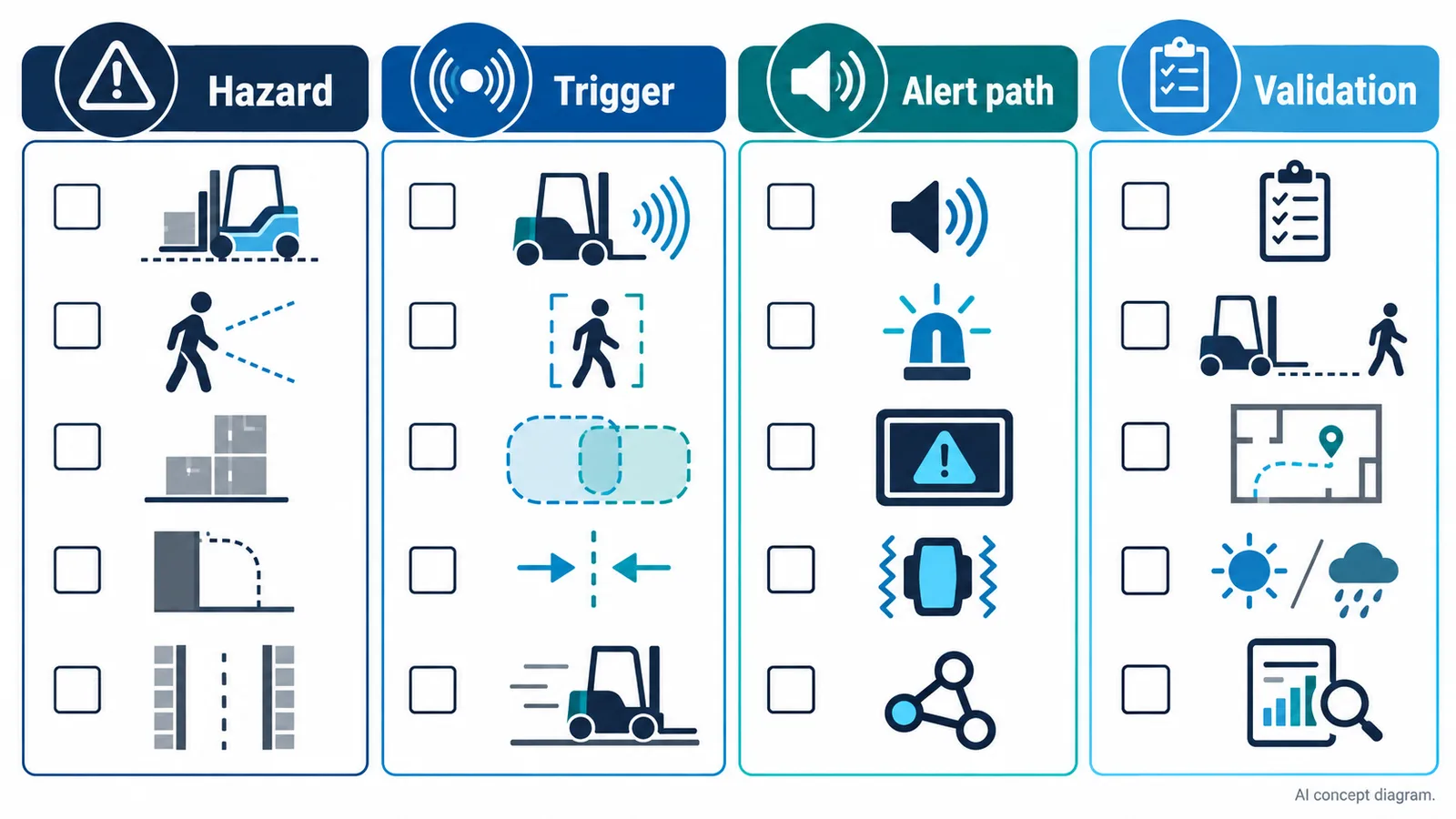
A meaningful review covers more than whether a tag is detected. Ask how the intended recipient will recognize and interpret the warning in the actual work environment. The responsible specialists should consider applicable operating conditions, existing signals and the tasks being performed.
Questions for the supplier and review team include:
- Which vehicles, workers or other objects must carry equipment for the proposed function to operate?
- What happens when a required device is absent, incorrectly worn, damaged or unpowered?
- What limitations apply to mounting, loads, obstructions and the working environment?
- How are configuration changes controlled and verified?
- How are warning availability and degraded operation indicated?
- What information is available for a post-event review, and what cannot be reconstructed?
- What inspection, maintenance and training responsibilities remain with the site?
Record answers for the exact offered configuration. Avoid combining the strengths of several product demonstrations into a capability no single system has been shown to provide.
Request an evidence plan before a site trial
Ask the qualified review team to define the scenarios, observations, acceptance criteria and controls for the trial. Testing should use a controlled procedure that does not place people in a hazardous encounter to see whether an alert occurs.
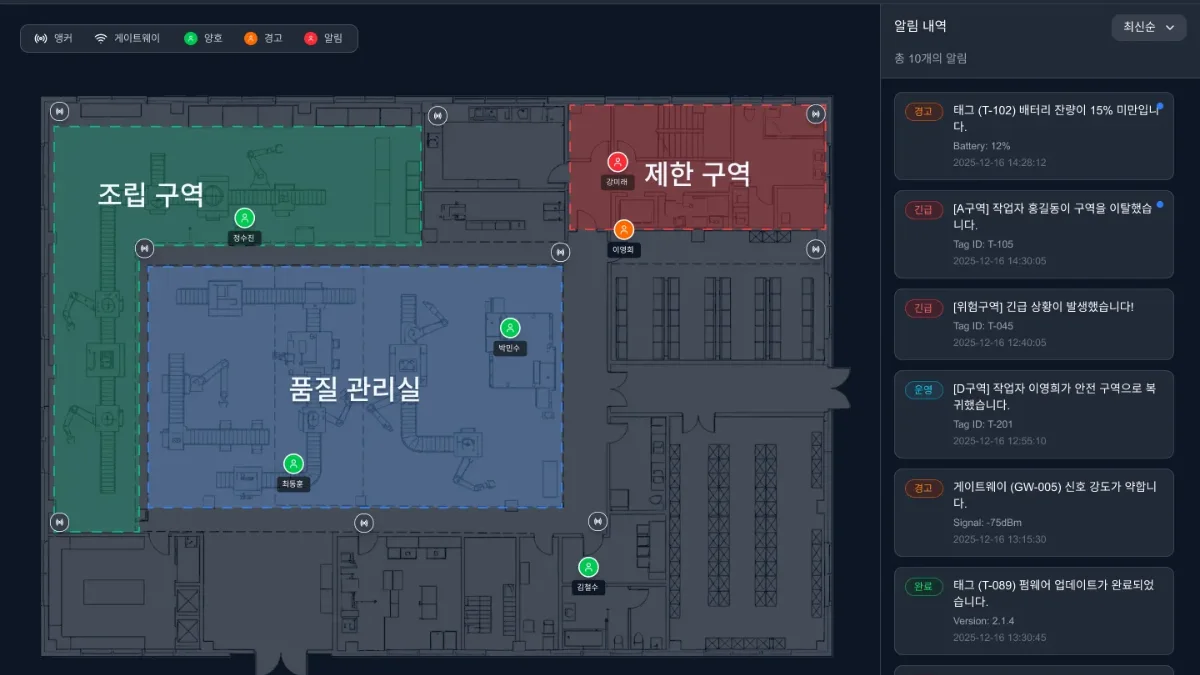
The review may need evidence about representative operating conditions, warning delivery, missed or nuisance events, device loss and other failure states. The appropriate test method and thresholds belong to the qualified assessment. A generic article cannot determine them from vehicle speed or a marketing accuracy figure.
Require the report to preserve limitations. Record the conditions tested, product versions, observation method and untested conditions. “No incident occurred during the demonstration” does not establish collision-prevention performance. The absence of a logged event may also reflect missing data rather than the absence of a hazardous situation.
Keep the operating responsibilities visible
Before procurement, name the owners of configuration approval, equipment checks, training, maintenance, fault response and evidence retention. Confirm how the supplier’s support scope connects to the site’s operating procedure.
Ask for applicable certifications or safety-related documentation by exact product and function when they are relevant to the requirement. Review those documents with the qualified specialists; do not substitute a company logo, an unrelated certificate or a general RTLS specification.
An asset-tracking development kit, a monitoring dashboard and a proximity-warning product serve different scopes. Describe the function you need first, then evaluate the product and evidence against it.
Preparing a forklift warning-system brief? Discuss the required warning function and site assessment with GrowSpace. Bring the hazard description, current controls, vehicle and pedestrian conditions, desired alert recipient and the questions your qualified review team needs answered.
Related posts
- Freegrow Completes Development of Geomagnetic-Based RTLS Algorithm
- Freegrow Announces Update to Its UWB-Based Indoor Positioning System
- Buying a UWB Kit for an Overseas Team: What to Include in Your RFQ
- Freegrow Selected for Regional Innovation Scale-Up Program by the Ministry of Science and ICT and the Innovation Cluster Foundation