GPS drops the moment you step indoors.
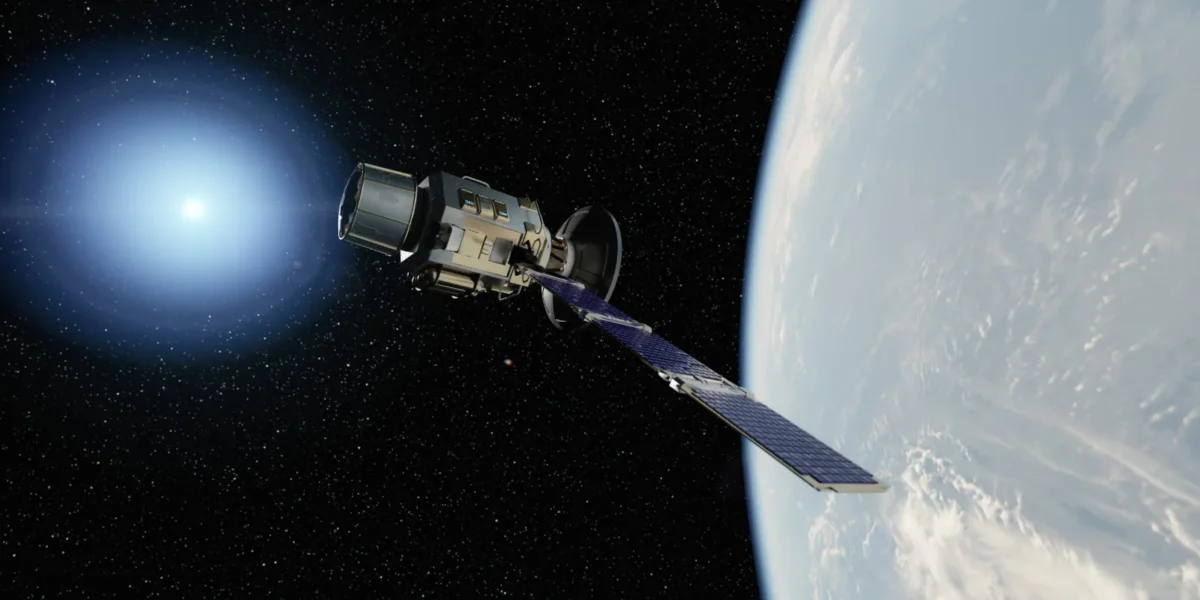
That’s the first thing anyone building a positioning system for a warehouse, a factory floor, or a parking structure runs into. Outdoors, a modern GPS receiver gets you within a few meters, and adding RTK correction shrinks that to one or two centimeters on a tractor, a survey drone, or a self-driving car with a clear view of the sky. Walk into a building, though, and none of that works, because satellites can’t reach through a concrete roof.
This is where the two technologies split. RTK GPS handles outdoor precision. UWB — Ultra-Wideband — handles everything GPS can’t see. Assuming one covers both is the mistake most projects make early on.
What Is RTK GPS?
Standard GPS works by trilateration. Your receiver picks up signals from four or more satellites, each carrying a timestamp, and calculates distance from how long the signal took to arrive. Add up atmospheric delay, signal bounce off nearby buildings, and clock drift, and the result lands somewhere between 3 and 10 meters off your real position. Fine for driving directions. Not fine for anything that needs a specific spot.
RTK, or Real-Time Kinematic, GPS closes that gap. A fixed base station sits at a known location, compares its own GPS reading against that known point, and streams the difference to a rover unit in real time. The rover applies the correction to its own signal.
Accuracy drops to 1 to 2 centimeters. Outdoors, continuously, as long as the rover keeps a clear line of sight to the satellites and the base station’s radio link. That’s why RTK GPS shows up in autonomous vehicles, drone surveying, precision agriculture, and construction machinery — every one of those operates under open sky.
What Is UWB?
RTK GPS still needs satellites. Take it indoors, underground, or into a steel-frame warehouse, and the signal simply doesn’t arrive.
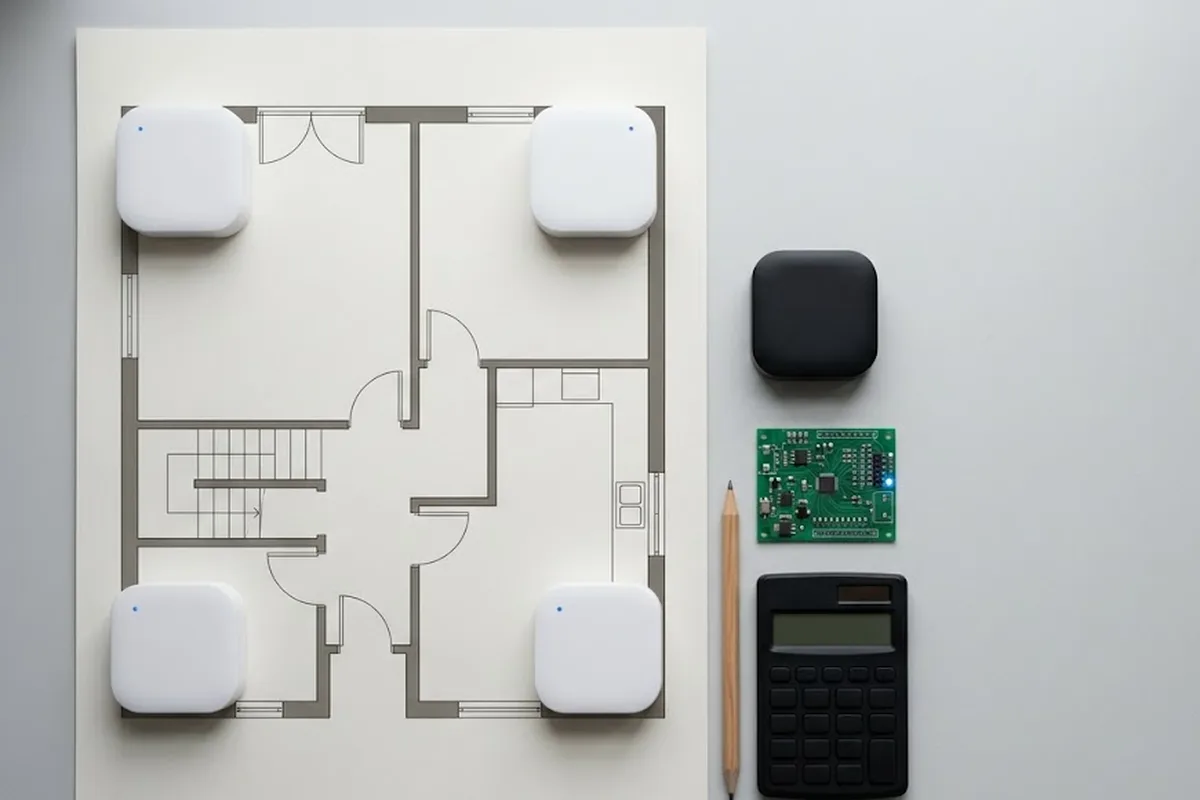
UWB positioning skips satellites entirely. A network of fixed anchors, mounted around a space, exchanges very short radio pulses across the 3.1 to 10.6 GHz band with a tag worn or attached to whatever you’re tracking. The system measures how long each pulse takes to travel between anchor and tag, a method called TWR (two-way ranging), and triangulates the tag’s position from three or more of those distances. Some deployments use TDoA instead, where the anchors compare arrival times against each other rather than each one pinging the tag directly. GrowSpace runs both methods, depending on the site.
Because the signal travels through open air instead of satellite orbit, GrowSpace’s own UWB developer kit holds 10 to 30 centimeters of accuracy out of the box. In cluttered industrial sites, raw accuracy drifts wider once signals start bouncing off steel shelving and machinery. If you’re still weighing UWB against other indoor options, UWB vs BLE vs GPS and RFID vs UWB cover where each one wins.
Here’s a real number. At one large domestic vehicle-logistics site, thousands of cars and steel racking everywhere, a fused setup running UWB together with RTK GPS and an IMU measured 23.05 cm of real-world accuracy. That’s not a lab result. That’s a working yard, and it’s also a hint at the answer for anyone whose site spans both outdoors and indoors: run both technologies into one map instead of picking a single winner.
Watch UWB track a tag in real time on the Z-axis (height) as it is thrown and caught — the same kind of accuracy behind the 23.05 cm fused result above.
RTK GPS vs UWB, Side by Side
| RTK GPS | UWB | |
|---|---|---|
| Environment | Outdoors, open sky | Indoors, underground, anywhere GPS can’t reach |
| Typical accuracy | 1–2 cm | 10–30 cm out of the box; wider in dense metal environments before correction |
| Positioning method | Satellite trilateration plus base-station correction | Radio pulse time-of-flight (TWR) or TDoA between anchors and tags |
| Infrastructure | GNSS base station and rover receiver | Fixed anchors installed around the space |
| Common use cases | Autonomous vehicles, drone surveying, precision farming, construction | Warehouse asset tracking, factory worker safety, indoor RTLS, hospital equipment tracking |
Real-World Use Cases
RTK GPS earns its keep outdoors. Autonomous vehicles use it for lane-level positioning, so the car knows which lane it’s in, not just which road. Drone surveying teams fly with it strapped on to get 3D scans accurate enough for construction planning. Smart-farming tractors use it to drive dead-straight rows without a human touching the wheel. Bridges, rail lines, and roads get built against RTK-measured reference points because a few centimeters of error compounds fast over a kilometer of concrete.
UWB takes over the moment the job moves indoors. Warehouses use it to track forklifts and pallets in real time instead of relying on someone walking the floor with a scanner. Factories mount it for worker safety, flagging when a person steps into a machine’s danger zone before an operator has to react. Hospitals use the same core technology to locate mobile equipment that otherwise goes missing for hours. None of these settings have a clear view of the sky, which is exactly why GPS was never in the running for them.
See it in action: the GrowSpace Q2 Starter Kit tracking three workers and assets through a warehouse with geofence entry/exit alerts, plus movement heatmaps from a sports-tracking deployment.
Which One Do You Actually Need?
If your equipment or people never leave open sky, a farm field, a road, an open construction site, RTK GPS on its own gets you there.
If the operation is indoors, underground, or inside a steel structure, RTK GPS won’t reach it. That’s UWB’s job.
If your site is both, a yard where trucks arrive and a warehouse where they unload, you need both feeding one map. That’s the fused approach described above: RTK GPS outdoors, UWB indoors, one location engine reading both, so tracking doesn’t break the moment a vehicle passes through a door.
Already decided you need UWB? The next question is which kit to start with. N1 vs Q1: How to Choose the Right UWB Kit breaks down which one fits a first test versus a full deployment, and Build Your Own UWB Setup or Buy a Kit covers the DIY-versus-kit tradeoff if you’re still deciding how much to build yourself.
Frequently Asked Questions
Can UWB work outdoors?
Technically, over a short range, yes. But it wasn’t built for it. Anchor installation and line-of-sight limits make it impractical outdoors at any real scale. Outdoors stays RTK GPS’s job.
Can RTK GPS work indoors?
No. Even near a window with an unobstructed antenna, satellite signal degrades too much to be reliable. Concrete, steel, and multiple floors block it outright.
Do I need a base station for RTK GPS?
Yes, or a subscription to a correction network. Either way, the correction data has to come from somewhere close enough to stay accurate.
What accuracy can I expect from a UWB kit out of the box?
10 to 30 centimeters, depending on anchor placement and how much metal is in the room. That’s before any site-specific correction work.
Related Reading
How Many UWB Anchors Do You Need? 2D vs 3D · UWB Smart Key: Getting Truly Smart with UWB Technology · RFID vs UWB: Which Is Best for Indoor Tracking
Neither technology replaces the other. RTK GPS answers where, outdoors, to the centimeter. UWB answers the same question the moment you walk through a door. If your site has both, start with GrowSpace’s UWB developer kit (see the Creator Kit Q1 spec sheet) to test indoor accuracy yourself, from $777, or talk to the team about a full indoor RTLS deployment if you already know the scope.