You can start a discussion before your schematic or Gerber files are ready
“Can I ask about PCB prototyping if I do not have a schematic yet?” The answer is that an initial discussion does not always require complete manufacturing files. However, the less information available, the more scope questions need to be resolved first. The next step differs depending on whether you already have fabrication data, have a circuit diagram but no board layout, or only have a functional requirement or an older sample board.
Rather than asking only for “one PCB,” describe what the equipment needs to do, what materials you have, and which work stages you need. This guide helps organize those questions before a quote discussion. Feasibility and quote scope must be determined after the requirements and available materials are reviewed.
Start by identifying the materials you have
1. You have Gerber files, a BOM, or other fabrication data
If manufacturing data and a bill of materials are ready, clarify whether you need board fabrication only or also component sourcing and assembly. File format, quantity, component substitutions, inspection, and acceptance criteria are details to confirm before production. The files and parts may still require review. If your Gerber and BOM files are ready, start with the PCB manufacturing request checklist. This article focuses on scoping a discussion that starts before those files are ready.
2. You have a schematic but no board layout
If you have a schematic but no PCB artwork or Gerber files, first determine whether circuit review and board layout are in scope. Also describe constraints that affect placement, such as board dimensions, mounting points, connector orientation, power conditions, and installation environment. A schematic does not automatically produce manufacturing files; confirm whether design work is included in the quote.
3. You have a functional requirement or an existing board sample
A request that begins with “I need the equipment to read a sensor and show its value” or an older sample board may be a development discussion rather than a fabrication-only order. Explain the required inputs and outputs, what you want to change on the existing board, and whether firmware or connection to another system is needed.
Do not assume that a sample board can be reverse-engineered or reproduced. The sample and available materials need to be reviewed, along with relevant technical and rights constraints, before a feasible scope can be discussed. Do not attach confidential schematics or customer information to a public inquiry form; ask first how original files should be transferred.
If an older board contains a discontinued component
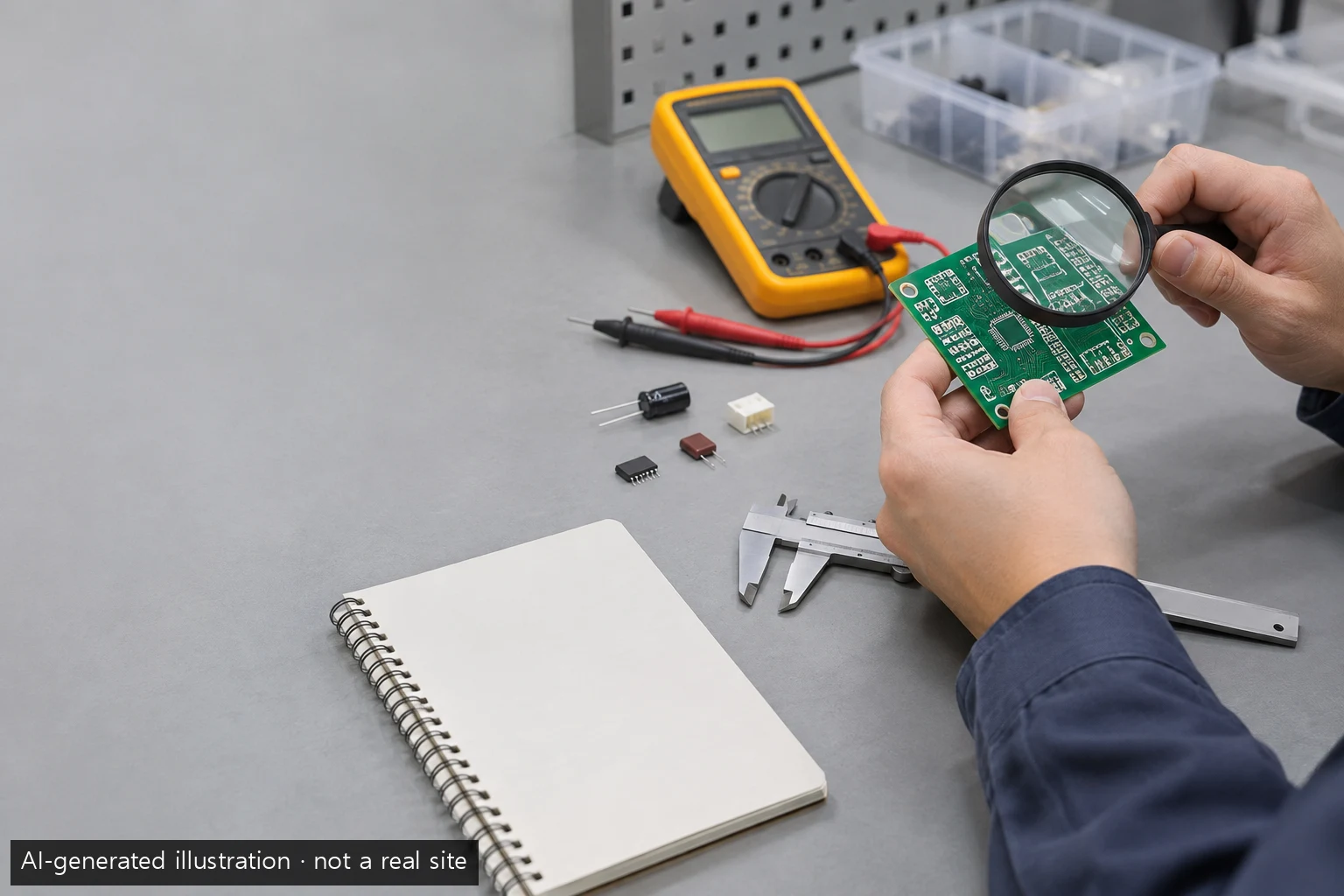
As a hypothetical example, an older controller board may contain a part that is no longer readily available. Do not assume the board can simply be copied. First note the equipment model, part number, firmware version and whether source files are available, and the behavior that must be preserved. Component substitution, circuit or firmware changes, and the tests needed to check the original behavior are separate scope questions. Compatibility, replacement feasibility, and preservation of behavior cannot be confirmed before the materials are reviewed and tested.
Separate the quote into work stages
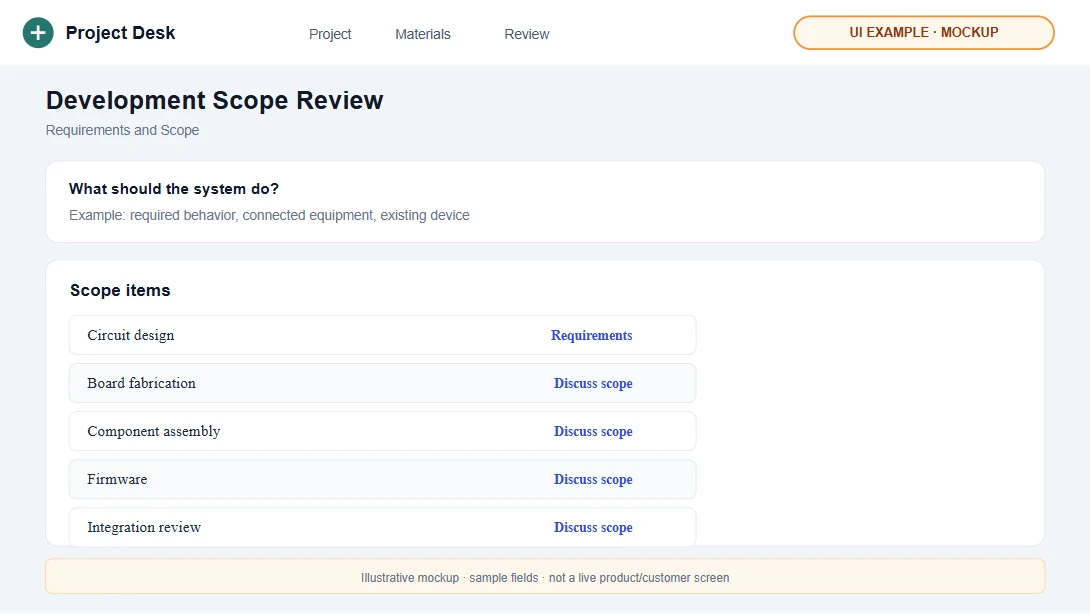
Treat the following as separate scope questions instead of assuming every PCB request includes all of them:
- Requirements: equipment purpose, inputs and outputs, operating environment, and required behavior
- Circuit design: whether a circuit needs review or new design
- PCB design: board layout and constraints such as dimensions, connectors, and mounting
- Board fabrication: whether manufacturing files are ready and board production is needed
- Parts and assembly: bill of materials, sourcing scope, and component substitutions
- Firmware and integration: standalone board behavior or communication with equipment, a PC, or a facility system
- Functional checks: inputs to test, expected results, and acceptance criteria
Whether each stage is available and who owns it must be confirmed for the specific project. The custom development overview describes custom PCB design and fabrication as well as embedded and firmware work. It is background on the company’s stated service scope, not a guarantee about an individual project or its outcome. For context on connecting circuit, firmware, and software scopes, see the embedded development article; it is not evidence of a specific PCB project.
Define what the prototype needs to verify
The check plan changes depending on whether the prototype is intended to verify power-up, an output triggered by a sensor input, or communication with existing equipment. Agree on input conditions, expected behavior, exceptions, and the logs or measurements to review before testing.
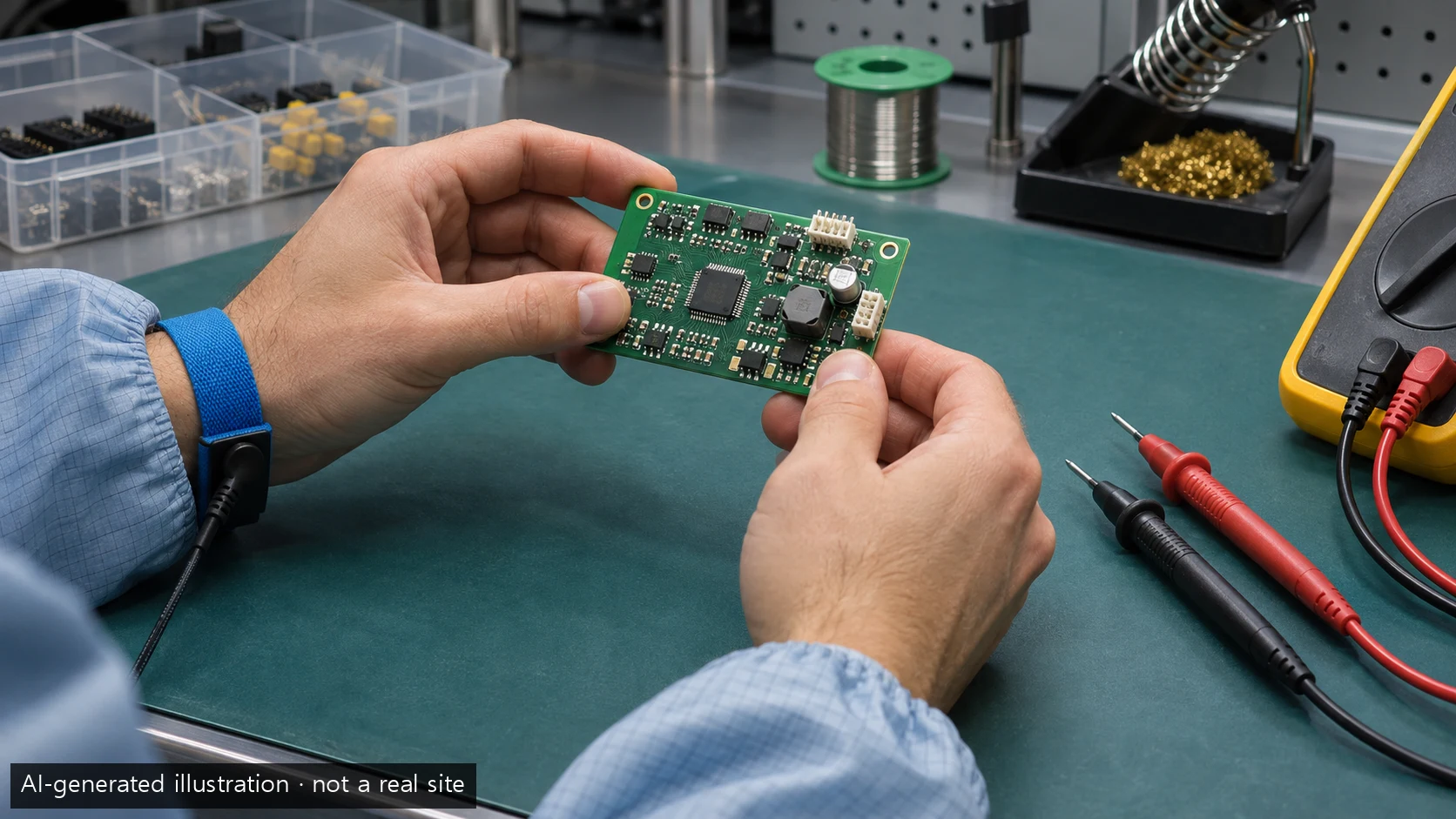
Do not present untested performance or error rates as established results during quoting. After the circuit, components, and firmware scope are understood, discuss the test method and decision criteria. Record the conditions and boundaries of any prototype check so that results are not generalized to different conditions.
Prepare four items before contacting a team
- Equipment and intended function: what the equipment should do or what problem it should address
- Available materials: schematic, PCB files, Gerber, BOM, specification, or an existing board sample
- Work scope: fabrication only, circuit/PCB design, assembly, firmware, equipment integration, or functional checks
- Quantity and target timing: share planning information for review; it is not a delivery or minimum-quantity commitment
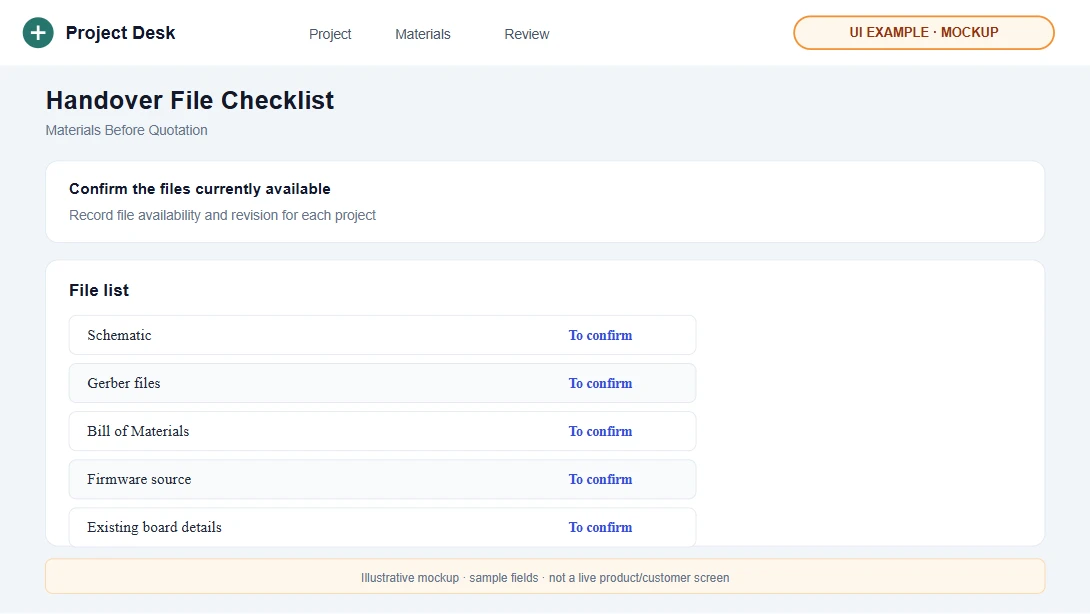
Do not attach confidential design files or customer information to a public inquiry form. If original materials need review, first ask what file format and transfer method to use.
Preparing for a PCB prototype quote
The discussion differs depending on whether you already have manufacturing data or need to define a development scope from functional requirements. Summarize the four items above without confidential details and send them through the inquiry page. Mention whether you need circuit, firmware, mechanical, or higher-level system work so the initial scope can be discussed. Price, schedule, quantity, and performance need to be reviewed against the actual requirements and materials. FREEGROW is based in Busan, South Korea.